


By Fr. Leonard Ehiemere
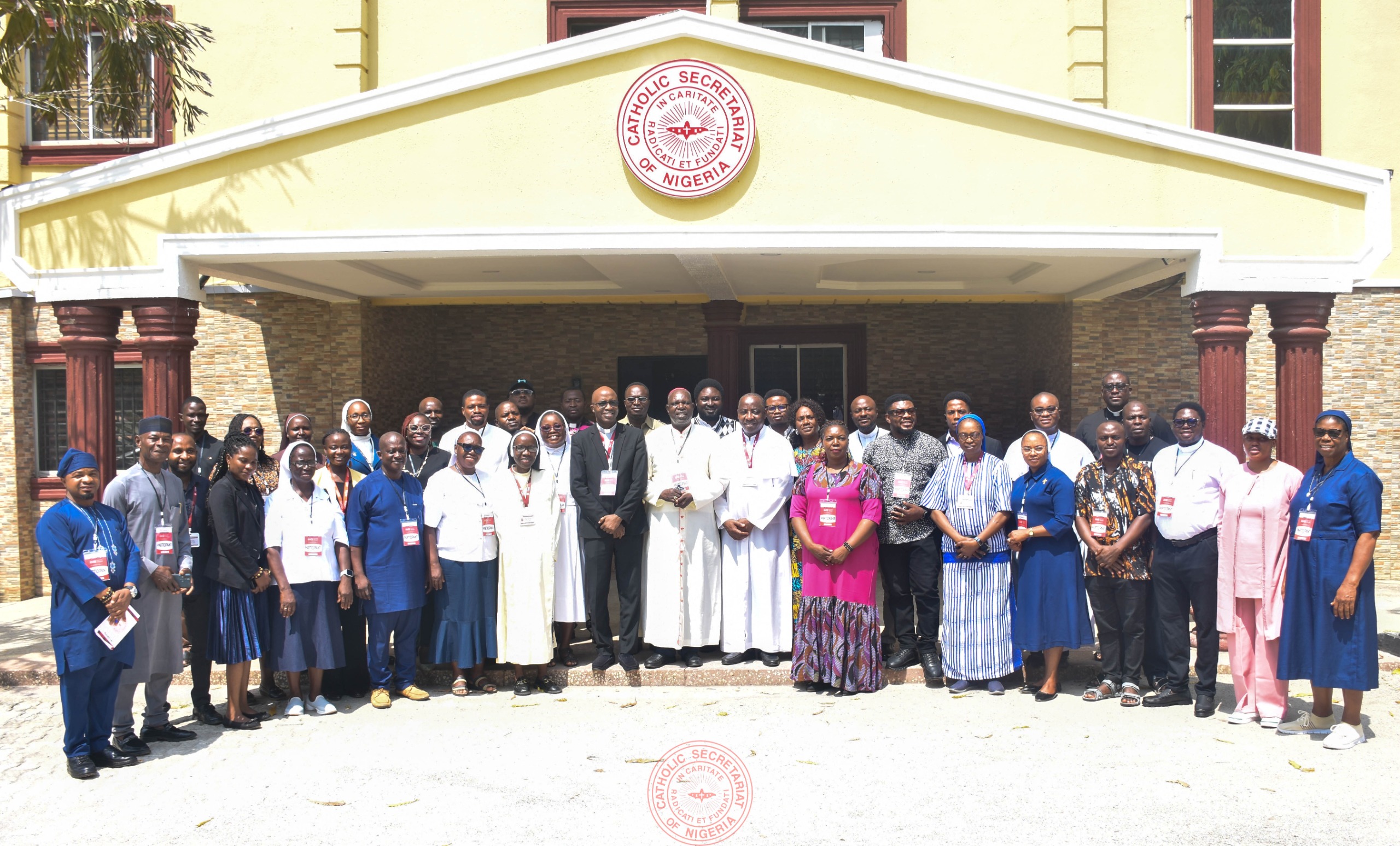
The Bishop-Chairman of the Migrants and Refugees Unit of the Catholic Secretariat of Nigeria, Most Rev. Sylvester Gopep, has called on Catholic dioceses, religious congregations and humanitarian partners to strengthen existing educational initiatives to address the disruption of schooling among internally displaced children in Nigeria.
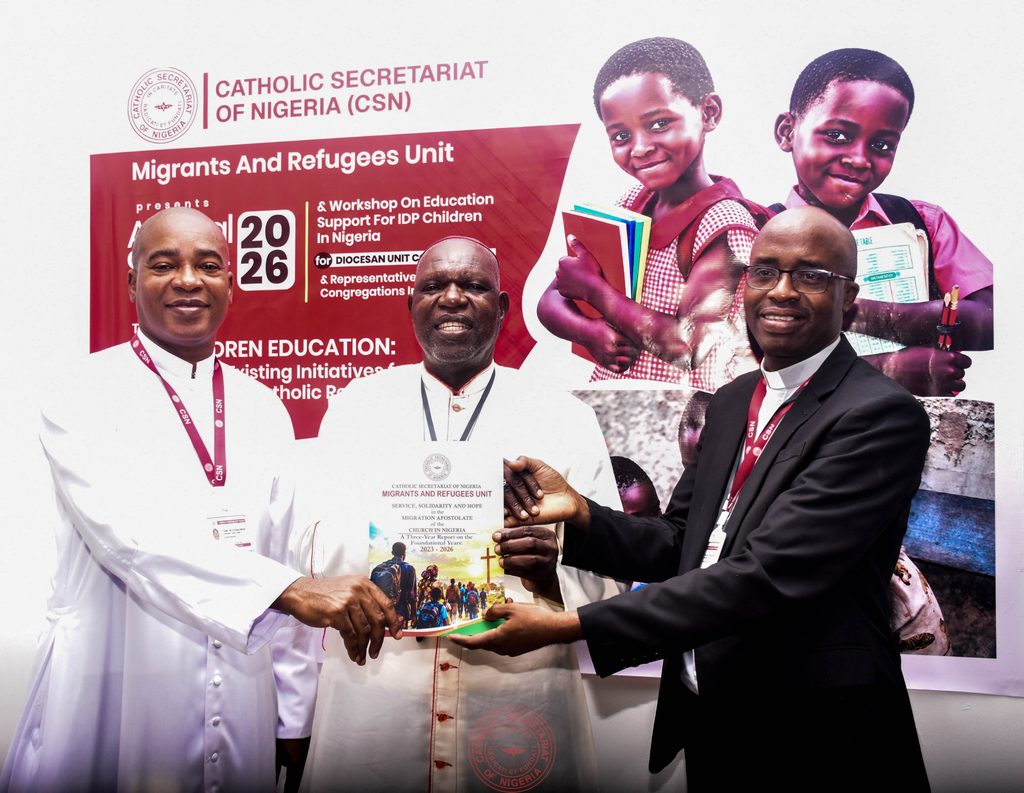
Bishop Gopep made the call while addressing participants at the Annual General Meeting (AGM) and training workshop of the Migrants and Refugees Unit, where he stressed the need for a coordinated response to the educational challenges confronting children displaced by conflict, insecurity and humanitarian emergencies.
Speaking on the theme, “IDP Children Education: Leveraging Existing Initiatives for Strengthened Catholic Response in Nigeria,” the Bishop described education as a fundamental right that must be protected, particularly for children whose lives have been disrupted by displacement.
He noted that many displaced children had been forced out of school, leaving their aspirations and future opportunities uncertain.
“These children are not merely statistics. They are created in the image and likeness of God, with dignity, talents, hopes and futures that deserve protection,” he said.
Quoting Matthew 19:14, where Jesus says, “Let the little children come to me, and do not hinder them,” Gopep urged the Church to move beyond expressions of sympathy and translate its concern into practical interventions that would help displaced children return to learning.
He explained that although the Church might not be able to restore everything displaced families had lost, it could work collectively to prevent children from being permanently denied access to education.
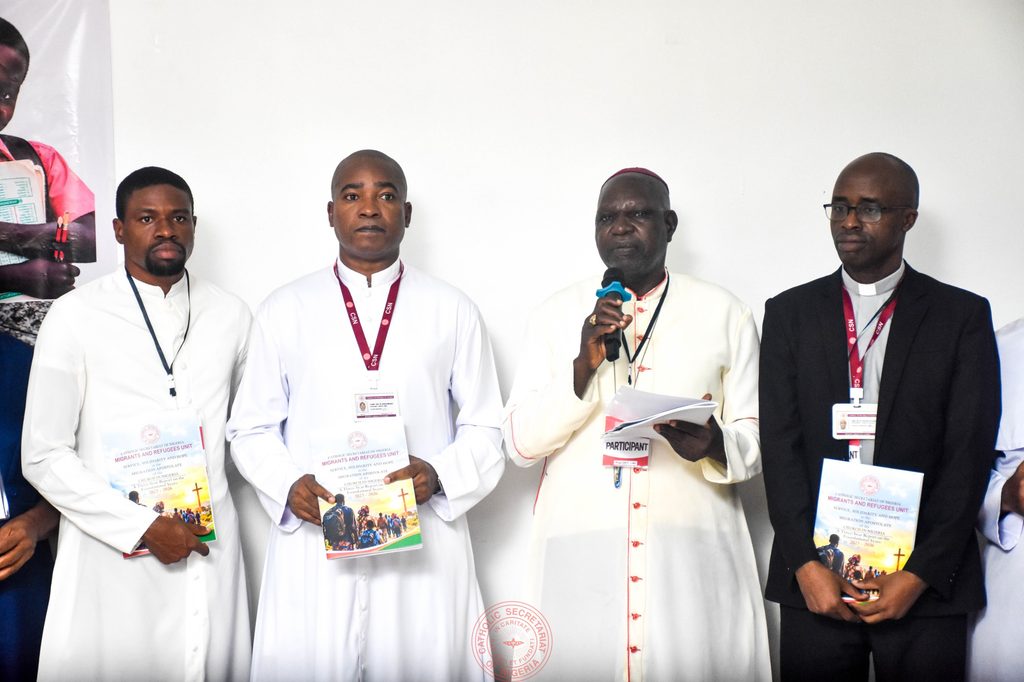
The Bishop, who is the second to occupy the position since the establishment of the Migrants and Refugees Unit, acknowledged the groundwork laid by his predecessor and the unit’s Secretary, Very Rev. Fr. Augustine, describing their contributions as a strong foundation for the work ahead.
He called for unity, shared responsibility and effective coordination among members, insisting that the success of the Unit would depend on the willingness of its members to pool their knowledge, experience and resources.
” I come not merely as Chairman, but as a fellow collaborator in the vineyard of the Lord, to listen, share, learn, encourage and work with you in advancing our common mission,” he stated.
Reflecting on the Unit’s development since its establishment by the Catholic Bishops’ Conference of Nigeria on September 1, 2023, Gopep said its initial years had focused on building diocesan structures, training pastoral agents, producing essential pastoral resources and strengthening relationships with government institutions, international organisations and civil society groups.
He, however, maintained that the next phase must focus on translating these institutional achievements into measurable improvements in the lives of migrants, refugees and displaced persons.
According to him, education must become a major component of the Unit’s humanitarian response, alongside pastoral care, protection and advocacy, humanitarian assistance, community mobilisation and institutional partnerships.
On how to achieve this, Gopep urged the Church to identify and strengthen programmes already operating within its dioceses, parishes, schools, religious congregations and charitable organisations rather than unnecessarily duplicating existing efforts.
He said the Catholic Church already possessed valuable structures and resources that could be better coordinated to expand access to education for vulnerable children.
“Our responsibility is not necessarily to create new programmes everywhere, but to identify what is already working, learn from experience, strengthen existing initiatives and connect them to a coordinated Catholic response,” he said.
He also identified five priority areas for the Unit: assessing the educational needs of displaced children, mapping existing Catholic initiatives, improving communication among coordinators, mobilising partnerships and resources, and establishing accountability measures to track progress.
The Bishop explained that such interventions should address practical needs, including school materials, teacher support, psychosocial care, safe learning environments and improved access to educational opportunities.
He further encouraged members to establish realistic targets, assign responsibilities and measure the impact of their interventions, noting that meetings should produce concrete decisions rather than end with discussions alone.
Addressing the need for stronger teamwork, Gopep urged diocesan and religious coordinators to embrace mutual respect, openness and cooperation, while avoiding unnecessary competition and duplication of activities.
He emphasised that the needs of displaced children must remain central to every decision taken by the Unit.
“Leadership also requires listening, learning and recognising the gifts of others,” he said, adding that members should freely share their experiences, concerns and ideas to strengthen the collective mission.
Concluding his address, Gopep expressed hope that the gathering would mark the beginning of a more coordinated and result-oriented approach to supporting displaced children and their families.
He urged members not to lose sight of the children whose education had been interrupted by conflict and hardship, citing Galatians 6:9: “Let us not grow tired of doing good.”
He called for sustained commitment, stronger partnerships and practical action to ensure that displacement does not permanently deprive children of their opportunity to learn and build a better future.
The Bishop also invoked the guidance of the Holy Spirit and the intercession of Mary, Mother of Hope, for displaced families and children whose education had been disrupted.

